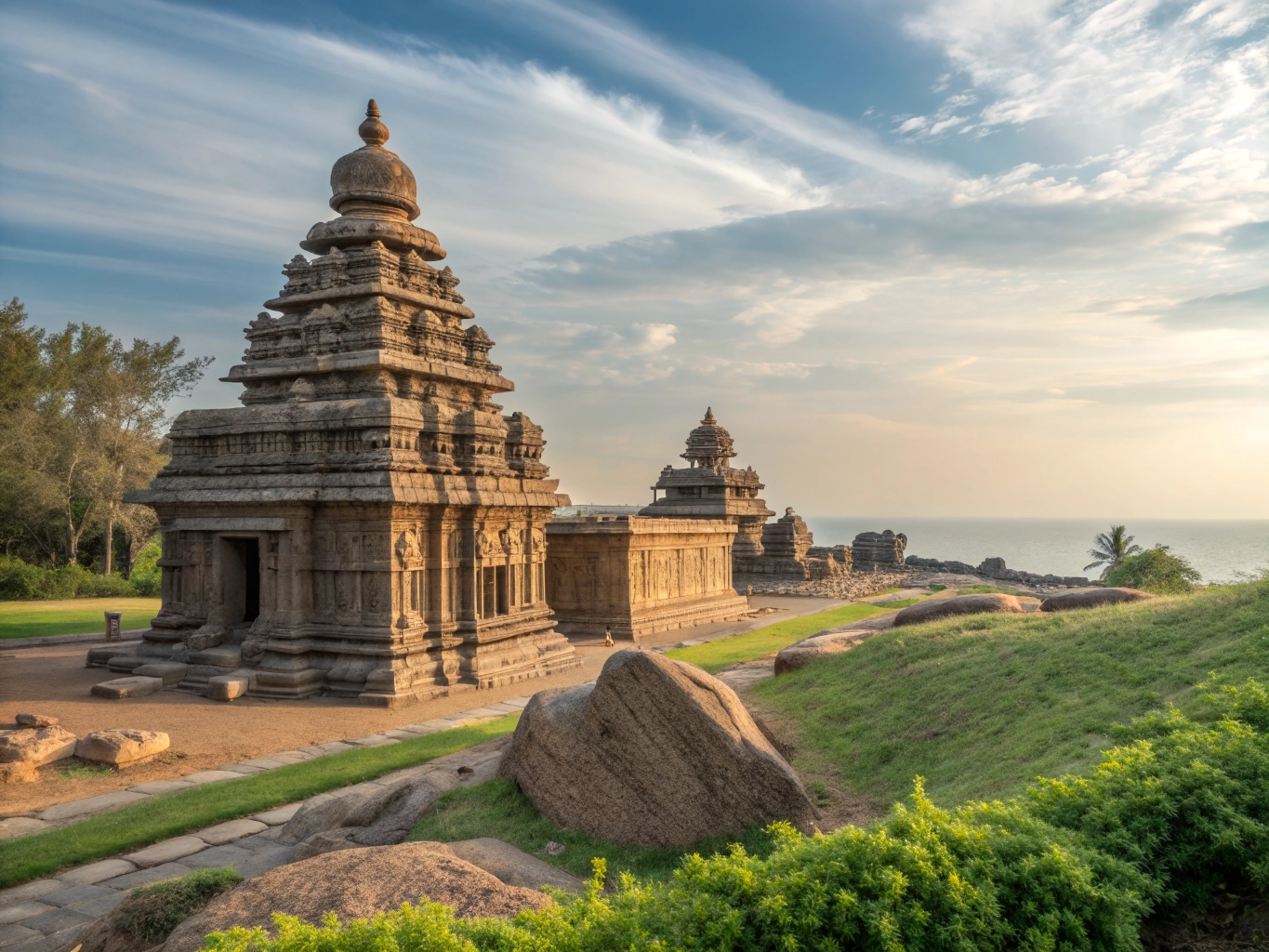
“Beyond Mallai” refers to a prominent heritage movement and guided tour circuit focused on exploring the lesser-known historical treasures surrounding Mahabalipuram (historically called Kadal Mallai or Mamallapuram) in Tamil Nadu, India
Organized by well-known heritage and cultural travel groups like Treks & Temples, this initiative goes beyond the usual tourist attractions to unveil the fascinating architecture, rock-cut caves, and inscriptions that showcase the rich legacy of the ancient Pallava and Chola dynasties.
Recently, my wife and I took part in this tour, and we had an absolute blast! In this post, I’ll share a bit more about our journey, offering a glimpse into the incredible temple heritage we explored, along with some cherished memories from our adventure.

We travel to open our hearts, and let’s be honest—who doesn’t love a good adventure? Travel invites us to marvel at the most absurd little things and the most magnificent wonders. Each day brings a fresh opportunity, and every trip connects us with nature, unfamiliar faces, and the delightful chaos of life, whether it’s through struggles or moments of blissful relaxation.
Now, I’ve always been fascinated by Indian history, especially our temples and all monuments. They ignite a mix of pride and melancholy in me. Every time I step out of my house, I can’t help but smile at how often we overlook the tiny beautiful things around us. Think about it: thousands of years ago, kings and queens—both Indian and European—left their mark by creating breathtaking monuments.
It’s now our responsibility to appreciate their efforts, cherish what remains, and ensure we don’t pollute or ruin these treasures. After all, if we can’t preserve our history, we’ll be left with nothing but, a sad little selfie, in front of a crumbling wall!
We start with our group of friends

We had an interesting mix of companions on our recent trip, including a geologist, a retired army veteran, a former ESI commissioner, an advocate, bankers, and IT professionals and our guide Mr.Sivashankar Babu. Mr. Sarangan was the life of the party, but unfortunately, he had to bow out on the afternoon of the second day due to some minor health issues. The dynamic duo leading our group were Mr. Ravi and Mrs. Uma.
Kachabeswarar / Marundeeswarar Temple’s
The name was given because the Lord had anointed the place with the amulet of a tortoise and because the banyan tree was a sacred tree for this place. (Kachapam – tortoise) It is said that it is like Kachapaur – Kachchur, according to the Kayapakkam Thiru. Sadasiva Chettiar.
The Temple, located north of Chengalpattu, is two km northwest of the railway station.This village is one of the Thyagaraja shrines in the Thondai Nadu. Sundaramurthy Nayanar ascended here from Thirukkazhukundram in a state of ecstasy.
Paramasiva ascended in the form of a Brahmin and went from house to house to house to beg for rice and then disappeared. At that time, Sundaramurthy Nayanar sang with great devotion. To the west of the temple, at the foot of the hill, there is a statue of the medicine man who gave the elixir. On the hill, there is a statue of the Eesar who prayed to Sundaramurthy Swami here.


Vallam Rock cut Caves


The Hidden Cradle of Pallava Art: Vallam Rock-Cut TemplesLong before the architectural marvels of Mahabalipuram took shape, the Pallava dynasty was already perfecting the art of carving temples straight out of living rock. Tucked away near Chengalpattu—just an hour’s drive from Chennai—lies the Vallam Cave Temples, a fascinating 7th-century historic site that remains blissfully free from tourist crowds.Excavated during the golden era of King Mahendravarman I (600–630 CE), this single granite hillock holds three distinct rock-cut sanctuaries that serve as a blueprint for early South Indian architecture.
Three Shrines, One Hillside
Rather than a grand monument, Vallam is an intimate cluster of three caves carved into the rock face:The Upper Shiva Cave (Vasanteshvaram): The crown jewel of the hill. It houses a rock-cut sanctum with a Shiva Lingam, guarded by uniquely stylized Dvarapalas (door keepers) brandishing tridents.The Lower Shiva Cave: A smaller, minimalist shrine that bears ancient inscriptions detailing early regional patronage, including contributions by Pallava women.The Northern Vishnu Cave: Dedicated to Lord Vishnu (Karivarada Perumal), this cave also features an elegant exterior relief of Vishnu Durga.
What makes Vallam incredibly rare is who built it. While most massive cave temples of this era were commissioned directly by kings to project state power, inscriptions here reveal that one of these lower shrines was funded by a noblewoman named Kommai, the daughter of Lakka Somasiriyar. This gives us a fascinating, rare look into early female patronage and religious autonomy during the 7th century.”
Why it belongs on your weekend bucket list:
Vallam is the ultimate destination for slow travel and history buffs. Architecturally, it showcases the classic Mahendra style—defined by massive, heavy pillars that are square at the ends and octagonal in the middle. Beyond the history, climbing the 80-plus rock steps rewards you with sweeping, panoramic views of the surrounding countryside and nearby Kolavai Lake. It is a quiet, breezy window into the past, perfect for anyone looking to escape the city and connect with ancient Tamil heritage.
The ancient Vishnu temple located in Ulagapuram


Name of the deity Arinjaya Vinnakar resided in the AzhwarPeriod / Ruler 10th century AD / Rajaraja Chola Inscription .
Also, the names of lakes like Kalakanda Pereri and Kandarathittha Pereri are found in the inscriptions. It is also known from the inscriptions that there were temples like Vasal Mahasathanar Ayyanar Temple and Gokarniswaram Udaya Mahadeva Temple in the south of this town.
Summary :
From Chennai, 120 km away from Tindivanam, on the road to Uppuvellur, Ulagapuram is located in Vanur taluk, 18 km. away. They were built in Chola-era . Cylindrical pillars are located in the front hall. The entire temple has been renovated. Later sculptures are featured in the sanctum sanctorum. The sanctum sanctorum is square in shape.
Discovering Marakkanam’s Forgotten Heritage: The Sri Bhoomeeshwarar Temple


Tucked right off the busy East Coast Road (ECR), the Sri Bhoomeeshwarar Temple in Marakkanam is a fascinating stopover for history buffs traveling between Chennai and Pondicherry. Though it lacks a towering outer entrance (Rajagopuram), this stone-built temple (Katrali) hides a treasure trove of unusual architectural elements and deep-rooted legends spanning over 1,000 years.
Unique Architectural HighlightsThe Nine-Hole Viewing Window:
Unlike standard temples where the sacred bull faces the deity openly, the Nandi Vaahanam here sits inside a four-pillared mandapam and gazes at the main Shiva Lingam through a unique stone window containing exactly nine gaping holes (Saalaram).
The Missing Goddess Mystery: While exploring the courtyard shrines, keen eyes will notice an architectural puzzle within the Sapthamathas (Seven Divine Mothers) group—the idol of the Goddess Indrani is entirely absent, leaving behind an unexplained mystery.
Unusual Layouts: Rather than housing the traditional Vinayagar (Ganesha) statue in the main outer niche (Koshtam), the temple uniquely features Sri Pichandavar (Lord Shiva as a wandering mendicant). Furthermore, Goddess Girijambal’s shrine faces east with her own personal Nandi instead of the traditional lion (Simha) vehicle.
The Stone Symphony: Mahabalipuram’s Shore Temple


The Shore Temple in Mahabalipuram, Tamil Nadu, is an iconic 8th-century architectural marvel overlooking the Bay of Bengal. Situated in Mamallapuram (Mahabalipuram), about 60 km south of Chennai.
Dynasty: Built during the reign of King Narasimhavarman II (Rajasimha) of the Pallava dynasty around 725 CE.Designation: Recognized as a UNESCO World Heritage Site as part of the Group of Monuments at Mahabalipuram.
Architecture and Significance Structure: Unlike many rock-cut monuments nearby, it is constructed using finely cut blocks of local granite.Shrines: Features three main shrines—two dedicated to Lord Shiva (facing east and west) and a middle shrine housing Lord Vishnu.The Legend of the Seven Pagodas: Believed to be the last surviving structure of a legendary cluster of seven shore temples, with the others famously speculated to be submerged.
Quick Visitor Tips and Timings: Open daily from 6:00 AM to 6:00 PM.Best Time to Visit: November to February offers the most pleasant weather for coastal exploration.
Aadhi Varaha Perumal Temple – Mahabalipuram


Honouring Mr.Veludharan and Mr.Sivashankar Babu

Tucked away on the western slope of Mahabalipuram’s main hill, the Aadi Varaha Perumal Cave Temple is a hidden treasure of ancient Indian art. While most tourists crowd around the nearby Shore Temple, this late 7th-century rock-cut marvel offers a quiet, spiritual step back in time. It holds a rare distinction among the town’s monuments: it is a fully completed, active place of worship that has survived centuries of coastal weather.
Carved out of a single granite hill during the peak of the Pallava Dynasty, the temple serves as a bridge to classical Dravidian architecture. Its facade features striking fluted pillars supported by the backs of seated lions (vyalas). Interestingly, a newer 16th-century stone pavilion stands directly in front of the cave, completely hiding this ancient wonder from casual passersby.
Inside the dimly lit sanctum, the stone walls breathe with grand mythological storytelling. The crowning jewel is a massive high-relief panel showing Lord Vishnu as Varaha (the boar avatar) lifting Bhudevi (Mother Earth) from the primordial ocean. Unlike standard depictions, Varaha faces right here, holding her affectionately. Surrounding this are breathtaking panels of Gajalakshmi seated on a lotus being bathed by elephants, and a powerful Durga standing triumphantly over cosmic ignorance. The cave also serves as a political archive, featuring rare, inscribed stone portraits of Pallava kings Simhavishnu and Mahendravarman I with their queens.
Travel Tip: The doors open only during morning and evening pooja hours (8:00 AM – 12:00 PM and 3:00 PM – 5:00 PM).
Sadras Fort: A Fortress Swallowed by Time and Tides


Just a short drive south of Mahabalipuram lies Sadras Fort (originally known as Sadurangapattinam), a hauntingly beautiful relic of the Coromandel Coast’s colonial past. While British and French ruins are common across India, this fortress stands out as a rare, 400-year-old Dutch commercial stronghold.
From Muslin Weaving to WarLong before it was fortified, the local area was a booming hub for high-quality muslin cloth, pearls, and bricks. Drawn by this wealth, the Dutch East India Company (VOC) established a permanent trade factory here in the 17th century. Over time, intense colonial rivalry with the British led the Dutch to encase their factory inside a massive, brick-and-granite fortress. It ultimately became the backdrop for the Battle of Sadras (1782), a fierce naval clash fought just off its shores.
Inside the Ruins :
Maintained today by the Archaeological Survey of India (ASI), the fort’s quiet, coastal compound contains several evocative structures:
The Bastions & Cannons: Two massive iron cannons still guard the western entrance, framed by thick, fortress walls designed to absorb heavy artillery fire.
Commercial Architecture: Inside, you can explore the remnants of vaulted elephant stables, massive grain storage structures, and residential quarters built with distinct, radial Dutch brick arches.
Travel Tip : Located right next to the Kalpakkam Township, you can climb the fort’s rear steps for a stunning, breezy view where the coastal tree line meets the Bay of Bengal.
Parameswara Mangalam: Chennai’s Serene Riverside Kailasanathar and Shenbageswarar Temple


If you follow the breezy curves of the East Coast Road (ECR) past Mahabalipuram, the tourist buses begin to fade, replaced by swaying coconut groves and endless expanses of green paddy fields. It is here, near the quiet coastal town of Kalpakkam, that you will find Parameswaramangalam—a historic village home to two extraordinary, 1,200-year-old architectural secrets: the Sri Kailasanathar and Sri Shenbakeswarar temples.
Dating back to the 9th-century Pallava Dynasty, these twin shrines are linked by a single, beautiful divine legend that plays out across two entirely different landscapes.
Your journey begins at the breathtaking Sri Kailasanathar Temple, an isolated sanctuary perched on a high rocky outcrop right in the middle of the Palar River. Local folklore tells us that Lord Shiva once chose this secluded river island to hide away in deep meditation. When Goddess Parvati came searching for him, she had to scale the sharp, jagged rocks of the riverbed on her knees. Amazingly, if you look closely at the ancient bedrock leading up to the sanctum today, you can still see smooth, worn depressions that devotees believe to be her physical knee marks. Protected by a royal inscription from the Pallava king Nripatungavarman, this peaceful island hermitage feels entirely removed from the modern world.
But the story doesn’t end at the river’s edge. A short drive away into the quiet hamlet of Natham brings you to the Sri Shenbakeswarar Temple, the architectural twin to the river shrine. Here, you will encounter a fascinating design quirk: the massive stone Nandi bull faces completely away from the main deity. Instead of looking inward, Nandi gazes longingly out across the fields toward the distant Palar River, symbolically waiting for Lord Shiva to return from his island hiding spot. Surrounded by ancient, weathered Chola-era pillars and a serene village atmosphere, this temple is a living museum of South Indian heritage.
For travelers looking to escape the commercialized crowds of Chennai’s popular getaways, Parameswaramangalam offers a rare chance to walk through living history. Just be sure to time your visit with the morning (7:00 AM – 10:00 AM) or evening (5:00 PM – 7:30 PM) pooja hours when the village priests open the gates to these ancient worlds.


Thirukalukundram’s Thazha Kovil: The Fragrant Goddess and the Miracle Conch
While spiritual travelers routinely challenge themselves to climb the 565 steep mountain steps of Thirukalukundram, a structural masterpiece of equal mystic power waits completely on flat ground. Spread across a massive 10-acre campus, the Arulmigu Bhakthavatchaleswarar Temple—popularly called the Thazha Kovil (foothill temple)—is a magnificent living monument. Guarded by four towering gateway gopurams that pierce the sky, its grand stonework, sprawling outer courtyards, and deep pillared corridors directly mirror the architectural design layout of the iconic Annamalaiyar Temple in Tiruvannamalai.
The spiritual heart of this lower complex is the exclusive shrine of Goddess Parvati, worshipped here as Thiripurasundari Amman. Her sacred, self-manifested (Swayambu) idol holds a rare botanical secret: it is crafted entirely from Ashta Ganda, a precious, highly aromatic legacy compound composed of eight distinct organic herbs and natural perfumes. Because standard liquid anointments (abhishekam) would chemically corrode this rare, centuries-old herbal structure, regular daily rituals are performed strictly on the Goddess’s feet. Devotees can only witness the full, uncovered form of the deity being completely anointed on three highly specific days a year: Aadi Pooram, Panguni Uthiram, and Navaratri Navami.


The mysticism of the Thazha Kovil extends right outside its eastern gateway to the Sangu Theertham, a giant sacred water tank measuring 560 by 760 feet. Fed by pure rainwater streams washing down the mineral-rich mountain, this pond is locally celebrated for its intense healing properties. In a staggering natural phenomenon that continues to fascinate researchers, a genuine, fully-formed conch shell miraculously rises from the depths of the water once every 12 years. Legend states that Sage Markandeya once lacked a ritual vessel to worship Shiva, causing a conch to appear from the pond by divine design. The temple actively preserves these retrieved shells, creating a visible timeline of this timeless coastal miracle.


After an exhilarating two-day trip, it was time to head back to Chennai. We made plenty of new friends and exchanged fresh ideas during our time together. Before I forget, I want to highlight someone special—Mrs. Nirmala, the mother of our organizer, Mr. Ravi. She beautifully sang sacred hymns at every temple we visited, all while caring for her grandson, who joined us on this journey. A big thank you to her.
We thank Mr. Ravi, and Mrs. Uma for keeping our spirits high and looking after us so attentively. As we approached Chennai, our coach driver, Mr. Mohideen, shared some fascinating insights that left us in awe. He mentioned numerous hidden temples around Chennai that we had never heard of before. We’re grateful to him for driving us safely and steadily throughout the trip.
As we said our goodbyes, we looked forward to the next opportunity to hop on the bus together. Travel is truly a continuous adventure.
Discover More Temple Heritage Resources:
Deepen your understanding of ancient Indian monuments by exploring the website of Shri Veludharan who is an expert on temple heritage :
https://veludharan.blogspot.com/
Track ongoing local preservation efforts and historical architecture mapping through Curator, Guide and Heritage Speaker, Mr.Sivasankar Babu , https://www.babu4heritage.org.in/ , who has Interests in Heritage Tourism, Temple Art & Architecture , History, Photography and Financial Engineering


Leave a Reply